BGWEA, APSTE, BPA, the “Hydropower Association” and SPEE-BG express their disagreement with the proposed extension of the revenue cap for electricity producers
TO THE ATTENTION OF:
Mr. Dimitar Glavchev, Prime Minister of the Republic of Bulgaria
Mr. Vladimir Malinov, Minister of Energy
Ms. Lyudmila Petkova, Minister of Finance
COPY TO:
Parliamentary Committee on Budget and Finance
OFFICIAL POSITION OF THE REPRESENTATIVES OF THE RENEWABLE ENERGY SECTOR REGARDING THE PROPOSED EXTENSION OF THE REVENUE CAP APPLIED TO ELECTRICITY PRODUCERS IN §3 OF THE TRANSITIONAL AND FINAL PROVISIONS OF THE DRAFT LAW ON THE STATE BUDGET OF THE REPUBLIC OF BULGARIA FOR 2025
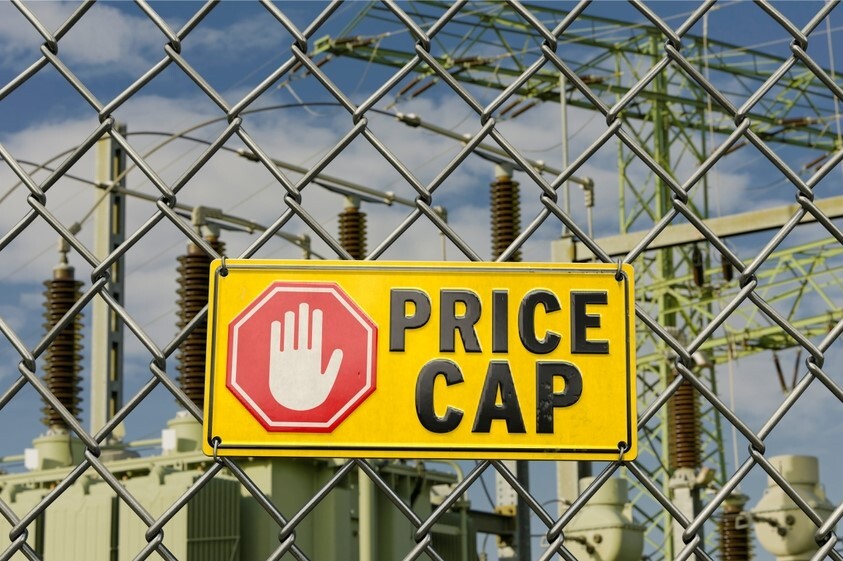
On behalf of the “Hydropower Association,” the “Bulgarian Wind Energy Association” (BGWEA), the “Bulgarian Photovoltaic Association” (BPA), the “Association for Production, Storage and Trading of Electricity” (APSTE), and the “Union of Ecological Energy Producers” (SPEE-BG), as legitimate representatives of the renewable energy sector, we express our disagreement with the proposal to extend the regime for determining a revenue cap for electricity producers.
Our objections to the continuing unlawful interference of the state in market principles and dynamics are based on the lack of any economic justification, the contradiction with the country’s strategic principles and priorities regarding the energy transition, and the gross violation of the legitimate interests of investors. Proposals that are unmotivated and contradict EU internal electricity market regulations and directly applicable regulations in Bulgarian legislation, which aim to achieve the EU’s strategic objectives, place Bulgaria at a disadvantage and discriminate against the most active private investment sector in the country. This sector contributes added value to GDP, plays a key role in decarbonization, and directly supports Bulgaria’s commitments to successfully implement the energy transition and integrate a higher share of renewable energy into the country’s energy mix (according to official data, the private renewable sector represents half of the total installed capacity in the country’s energy system).
The seriousness of the problem is compounded by the lack of clarity regarding the valuation of the measure, which is determined by a decision of the Council of Ministers, and specifically by the official statement of Minister Malinov that a proposal will be made to reduce the value of the existing revenue cap. Our categorical position is that adopting a lower revenue cap would jeopardize the functioning of the entire energy sector in the country and force many producers to either cease operations or drastically reduce their output. This, in turn, will significantly worsen the investment climate in the sector and place the country at a disadvantage compared to other EU states. Bulgarian energy will lose its competitiveness, as well as the incentives for market participants to continue investing and maintaining their facilities in proper technical condition.
Given the objective market realities, it is of utmost importance that the arguments for determining specific values become publicly known. Establishing transparent processes in this context will contribute to the legitimacy of the decision, which has been questioned during previous extensions of the measure. Experience to date has shown a complete lack of transparency, justification, and impact assessment—something we view as an unprecedentedly flawed practice based on misconceptions about the reality of energy markets. Any intervention must be grounded in a sound analysis of the benefits and overall impact on end users, while at the same time accounting for the actual additional costs for producers—costs that did not exist at the time of investment but have arisen from numerous legislative and regulatory changes over the last 10 years, which have significantly undermined the viability of companies operating in the renewable energy sector (including the introduction of Net Specific Production, contributions to the SEC Fund, the obligation to trade all generated electricity on the IBEX platforms along with the corresponding fees, balancing costs, higher operating expenses due to overall inflationary pressure, etc.).
Furthermore, the current mechanism for setting the revenue cap—applied to each transaction—creates significant risks for electricity producers. Under this approach, producers bear the full investment risk since, in hours of low electricity prices, they receive no revenue up to the set cap, while at the same time they cannot benefit from higher prices in other hours. Thus, on an annual average basis, the actual revenue of producers is significantly lower than the set cap. This leads to an imbalance that undermines the principle of market fairness and seriously threatens the long-term return on investments in the sector. If, however, a revenue cap is to be introduced, it should be calculated based on the weighted average annual market price. This would allow for a realistic assessment of market dynamics and ensure that producers receive an adequate return on their investments, considering the significant costs associated with operating renewable energy capacities.
We also draw attention to other important aspects that must be prioritized:
- Unjustified revenue confiscation imposes an additional tax burden, namely: electricity producers contribute 5% of their electricity sales revenue to the SEC Fund. In its current form, the calculation methodology, as interpreted by the SEC Fund, leads to double taxation of producers. First, the producer pays as a targeted contribution the difference between the market price and the cap whenever the market price exceeds the cap, and second, the same amount is included in the calculation of the 5% contribution to the SEC Fund. This represents impermissible double taxation.
- Continuation of the measure negatively affects investor security and creates risks for the functioning of the electricity market.
- It hinders the achievement of the goals set in the proposal for electricity market design, namely to facilitate the conclusion of power purchase agreements and to ensure the most liquid market possible for such agreements.
- It grossly violates the principles of legal and market fairness.
As representatives of an associated interest, we have repeatedly expressed our support for the full liberalization of the market, which requires ending cross-subsidization of businesses and end users at the expense of energy producers. Against the backdrop of the growing need for new renewable capacities to stabilize electricity prices, reduce energy dependence at both the European and national levels, and enable the transition to carbon-neutral technologies, the legislature must unconditionally establish a regime that guarantees investment protection in order for the economic system to function properly—instead of creating consecutive obstructions that undermine the viability of companies. Incentives must be introduced for flexible consumption by industry in line with periods of lower prices, which coincide with periods of high renewable energy production, as well as the full utilization of funds allocated under the Recovery and Resilience Plan, which are intended to support the development of energy storage facilities. Such a comprehensive approach would improve industrial energy efficiency, reduce energy costs, and increase competitiveness.
In conclusion, we emphasize that sustainable economic development, the investment climate, and the green transition are unthinkable if the renewable sector continues to be systematically placed at a disadvantage, with the legitimate interests of investors grossly violated. We call for ensuring equal treatment among the different categories of energy enterprises and for removing barriers to the development and functioning of a competitive energy market.
Respectfully,
BGWEA, APSTE, BPA, Hydropower Association, and SPEE BG