
What Do ESO’s Operational Data Show for the Period 1 January 2026 – 15 March 2026?
Analysis of ESO Operational Data for the Period 1 January 2026 – 15 March 2026
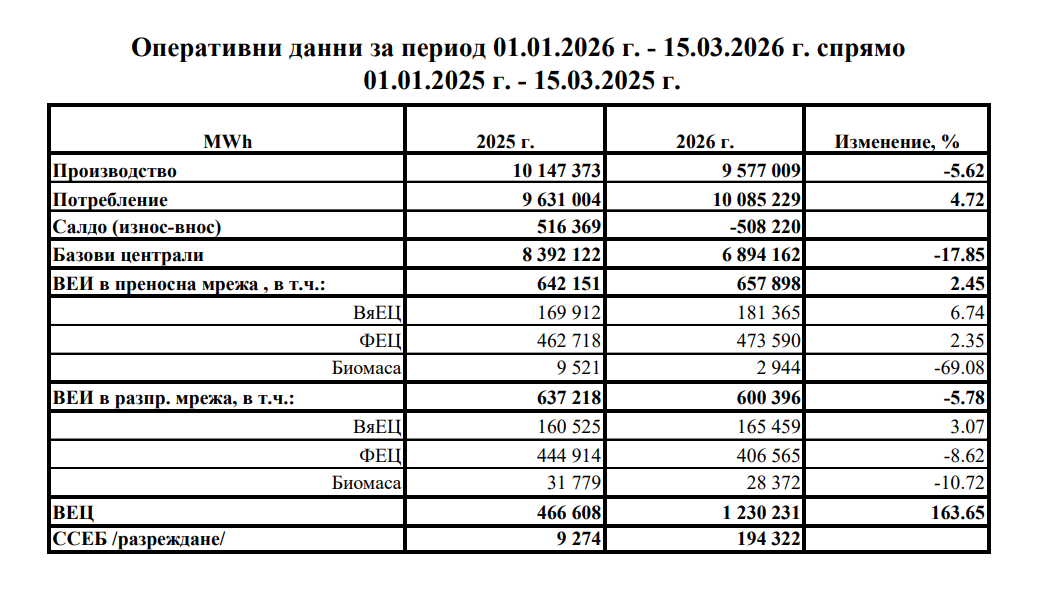
The operational report of the Electricity System Operator (ESO EAD) for the period from 1 January to 15 March 2026 indicates a deterioration in Bulgaria’s electricity balance. The most significant conclusion is that Bulgaria has shifted from being a net exporter to a net importer of electricity. With a balance of -508,220 MWh, compared to +516,369 MWh during the same period in 2025, the change exceeds 1 TWh in the negative direction. This is a strong signal of weakening domestic electricity generation at a time of increased demand.
1. Demand Is Growing While Generation Is Declining
The data show simultaneously:
- a 4.72% increase in electricity consumption;
- a 5.62% decrease in total electricity generation.
This means that the power system is under dual pressure: on the one hand, more electricity is needed, while on the other, available domestic generation is decreasing. In other words, precisely when the system has the greatest need for reliable domestic sources, part of the traditional generation fleet is either unavailable or unable to compete in the market.
In such circumstances, any technology capable of delivering real generation at a competitive cost during the winter and spring months becomes systemically important.
This is where wind energy stands out as particularly valuable. Electricity generation from wind power plants during the period reached 356,824 MWh, representing:
- a 6.74% increase compared to the same period of the previous year;
- 27.56% of total renewable electricity generation in Bulgaria, despite accounting for only 10.5% of the country’s total installed renewable energy capacity.
This is especially noteworthy because the increase occurred during a period of higher system stress—colder weather, higher consumption, and a stronger need for domestic generation. In other words, wind energy contributes when electricity is needed most.
2. The Main Pressure Comes from Baseload Generation
The most significant change is observed in baseload power plants, where total generation declined by 17.85%.
Although ESO does not provide generation data by technology within the baseload category, the Bulgarian Wind Energy Association (BGWEA) analyzed data from ENTSO-E, which indicate the following:
- Coal-fired power plants: generation down by 32.89%;
- Nuclear power plant: generation down by 10.6%.
The reduction in nuclear generation is linked to outages caused by equipment failures and maintenance activities during the period. In the case of coal-fired generation, the data clearly reveal the impact of non-competitive production costs, limiting market participation for economic reasons.
3. Renewables Offset Part of the Shortfall
Against this backdrop, renewable energy sources (RES) demonstrate positive performance:
- Wind: +6.74%;
- Solar: +2.35%;
- Hydropower: the strongest growth among all renewable technologies.
4. What the Structure of the Change Reveals
The overall picture is clear:
- Conventional baseload generation is weakening;
- Electricity demand is increasing;
- Renewable generation is growing and partially absorbing the pressure, but the lack of new wind capacity is having a noticeable impact on the system;
- Imports are becoming a necessary buffer for maintaining system balance.
This combination indicates that the Bulgarian power system requires a better balance between security of supply, flexibility, and the competitiveness of domestic generation.
5. Why Wind Energy Is the Missing Link
Wind Provides Domestic Energy During Times of Deficit
When domestic generation declines while consumption rises, every additional megawatt-hour produced from local sources reduces the need for electricity imports. This is particularly important in an environment characterized by regional price volatility and limited market predictability.
Wind Performs Strongly During Periods of High Seasonal Demand
Unlike some other technologies, wind energy often delivers stronger output during winter and transitional seasons, when electricity consumption is higher. This makes it exceptionally valuable for matching the seasonal demand profile of the system.
Wind Is Competitive and Independent of Fuel Prices
At a time when parts of conventional generation are becoming less competitive, wind energy provides electricity at a competitive cost without fuel expenses and without dependence on international commodity markets, supply chains, or geopolitical disruptions. This gives wind power particular value not only from an environmental perspective, but also from an economic and strategic one.
Conclusions
The data demonstrate that Bulgaria’s electricity system needs more wind energy—not as an abstract energy transition objective, but as a practical and necessary system resource.
Additional wind capacity would contribute to:
- reducing dependence on electricity imports;
- increasing domestic generation adequacy;
- improving system resilience when baseload capacity is unavailable or economically constrained;
- delivering more competitive and predictable electricity prices;
- strengthening energy security and reducing exposure to geopolitical risks;
- increasing the share of clean, renewable electricity in support of decarbonisation and climate objectives.
Rather than being viewed as a peripheral source of electricity, wind energy should be recognised as a key component of the future security of Bulgaria’s power system.
The data for the first months of 2026 show that when demand increases and traditional generation weakens, wind power is among the technologies capable of meaningfully alleviating pressure on the system. This provides a strong argument that Bulgaria needs more wind energy capacity—supported by timely investments in grid infrastructure, flexibility solutions, and a predictable regulatory framework.